Ceramic vs Graphene Coating: The Real Difference (and When Graphene Is Worth $200 More)
Ceramic or graphene coating? A Baulkham Hills detailer explains the chemistry, the real differences and when graphene is worth the extra $200.
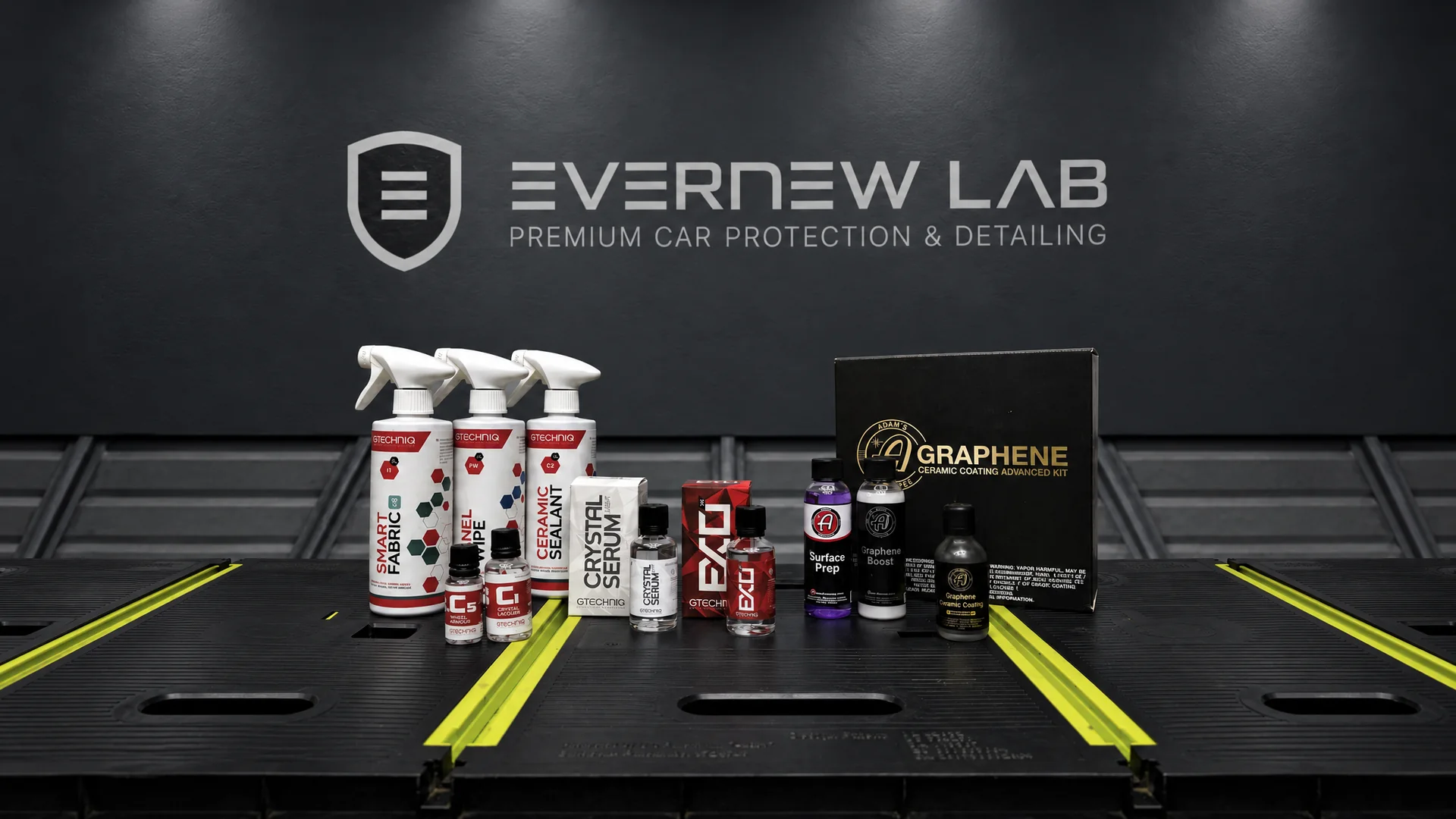
FIG. 01Gtechniq Ceramic and Adam’s Graphene, the two coatings we use in the studio.
“Ceramic or graphene?” is the question I get most at our Baulkham Hills studio. Most ceramic vs graphene coating comparisons online either sell graphene as a miracle or say there’s no real difference. Neither is right.
Here’s the short answer. Both are ceramic coatings, and both are great products. But graphene is an upgraded formula, and the differences are real: longer protection, more shine, and water behaviour that lasts as long as the coating itself. If your car lives outside, graphene is the one I recommend. If it’s under a roof most of the day, ceramic does a great job for less.
Below I’ll explain the chemistry behind both, what the brands’ own testing shows, and how to choose.
How a ceramic coating works
A ceramic coating starts as a liquid. Inside are silica-based ingredients (SiO2, the same family as glass). Once the coating is on the paint and in contact with the moisture in the air, these molecules react and link together into a tight, glass-like network that bonds to your clear coat. That’s why the full cure takes about 7 days.
This chemistry is well known outside the car world too. Polysilazanes, one of the ingredient families used in coatings, link together in air at low temperatures and are known for high chemical and thermal stability, hardness and strong adhesion to many different surfaces.
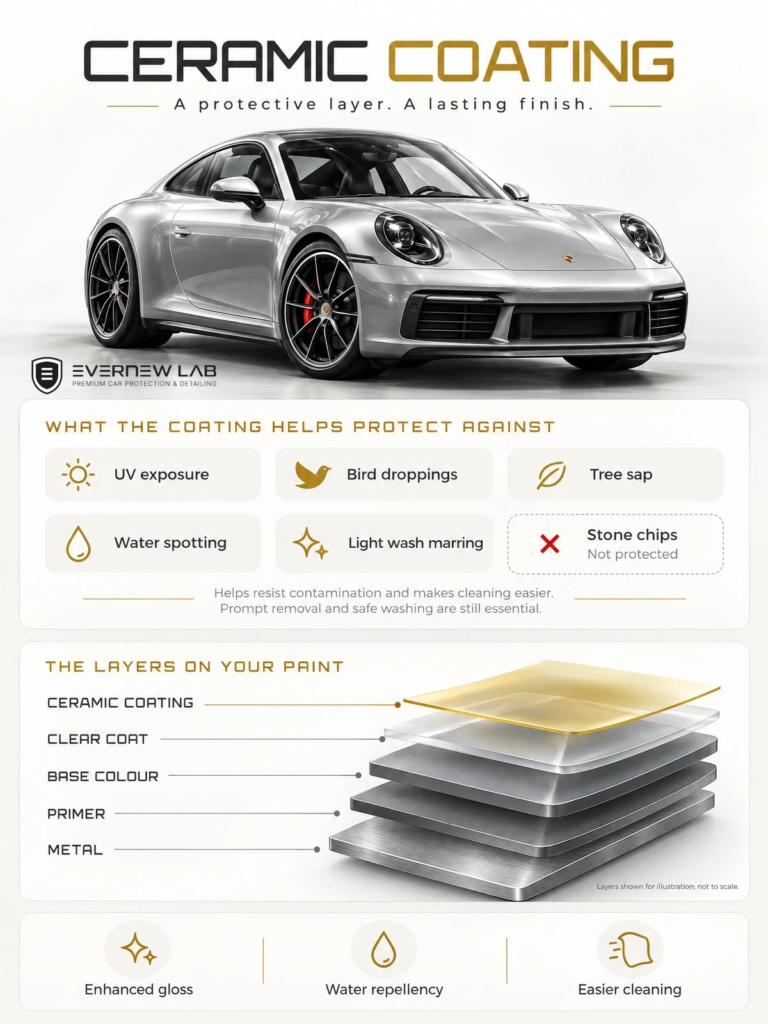
FIG. 02Where the coating sits on your paint, and what it can and can’t protect against.
Why a coated car is easier to clean
Under a microscope, even new paint has tiny pores and rough spots where dirt and water can grab on. The coating fills them and leaves a very smooth surface with low “surface energy”. In simple words, the surface doesn’t want to hold on to anything. Dirt has less to grip, so it rinses off with less effort, and less scrubbing means fewer wash marks.
How water beading works
Two numbers explain it:
Contact angle: how round a water drop sits on the surface. Under 90° the water spreads out. Over 90° it beads up. Gtechniq says around 120° is the highest achievable on a gloss surface.
Sliding angle: how much the panel has to tilt before the drop rolls off. The lower it is, the faster water leaves and the more dirt it takes with it. That's the "self-cleaning" effect, the same idea as water rolling off a lotus leaf.
For our ceramic package we use Gtechniq Crystal Serum Light with Gtechniq EXO v5 on top. Gtechniq says Crystal Serum Light gives up to five years of protection when properly applied and maintained. EXO adds the extra gloss and strong beading, and is listed with a 112° contact angle and 18 to 24 months of durability. Our 5-year warranty matches Gtechniq’s claim for the coating.
Gtechniq also asks that the car stays indoors for at least 12 hours after application, between 3°C and 25°C. That’s one reason we’re studio only. I keep every car about 12 hours after coating to check for high spots (areas with excess product), which are easy to fix in the first hours but may need polishing after 7 days.
What graphene is, and why it goes into a ceramic coating
Graphene is a single layer of carbon atoms arranged in a honeycomb pattern. Scientists at the University of Manchester first isolated it in 2004, using sticky tape to lift single layers off graphite. The work won the 2010 Nobel Prize in Physics.
It’s one of the most studied materials in the world. A presentation from the US National Institute of Standards and Technology lists graphene as the strongest material ever measured, a better heat conductor than diamond, and completely impermeable: even helium atoms can’t pass through it.
In industry, graphene is used in batteries, electronics, water filters and protective coatings. In coatings, researchers add graphene oxide and reduced graphene oxide to improve mechanical strength, heat behaviour and barrier properties, for example to protect metal against corrosion.
There’s one catch. Pure graphene won’t bond to car paint on its own, so it has to be grafted onto something.
That’s what Adam’s Polishes did. Their coating is a ceramic coating modified with reduced graphene oxide. The ceramic part bonds to the car, and the graphene part sits on top, forming the surface of the coating. Adam’s describes it as an evolution of ceramic coating that still contains SiO2.
We use Adam’s Graphene Ceramic Coating Advanced. Adam’s lists it at over 10H hardness and 9+ years of protection, with 50% more coating resin than their standard graphene coating.
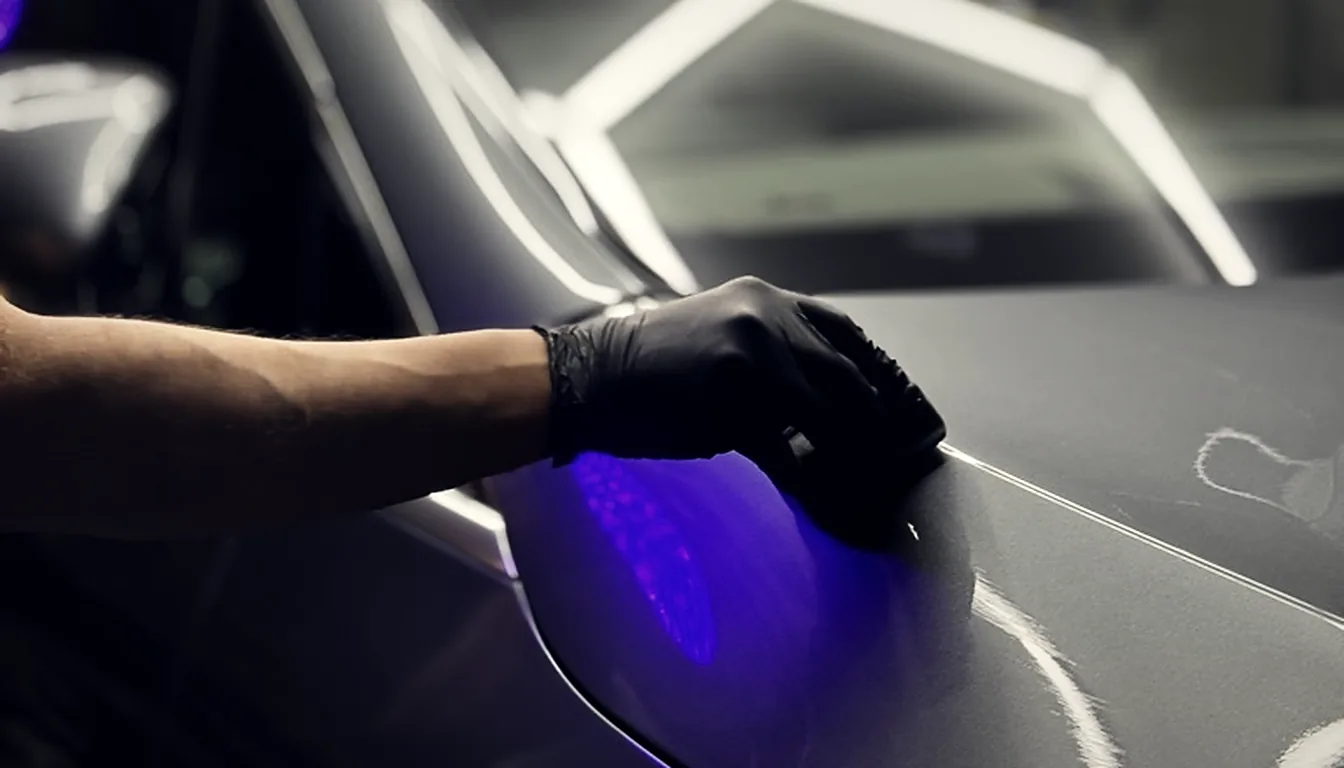
FIG. 03Under the UV torch the coating glows, so I can see every panel is fully covered.
Seeing the coating go on
Adam’s coatings include what they call UV Ceramic Glow Technology, an optical brightener that only glows under a 395nm UV light. The coating is completely clear in normal light, but under the UV torch I can see exactly where it’s been applied. That means every panel gets full, even coverage and nothing is missed. To be clear, the glow is an application aid. Adam’s says it doesn’t show how much life the coating has left.
Ceramic vs graphene coating: the real differences
Here’s how the two coatings we use compare, based on each brand’s own published claims.
Sources: Gtechniq, EXO v5 listing, EXO v5 specs, CSL hardness, Adam’s Advanced, Adam’s hardness ratings, Adam’s water angles.
1Longer protection
This is the biggest difference, and the main reason most of our customers choose graphene. Adam’s 9+ year figure comes from lab scrub-wash testing that simulated 9 years of washing. Gtechniq claims up to 5 years for Crystal Serum Light. Our warranties follow the same numbers: 9 years vs 5.
2The water behaviour lasts as long as the coating
To be fair, on paper the beading numbers of these two products are close. The real difference is how long that beading lasts. Our ceramic package gets much of its strong beading from the EXO top layer, which Gtechniq rates at 18 to 24 months. After that, the coating underneath keeps protecting the paint, but the water behaviour isn’t as strong until the top layer is refreshed. On graphene, the slick, water-shedding surface is part of the long-life coating itself.
3More shine and slickness
Adam’s says its graphene coatings are slicker and glossier because the film is thicker, with a higher level of active ingredients than their quartz coatings. I see this on the cars I do. Graphene cars have more shine and rounder water beads. It’s not a huge difference, but you can see it.
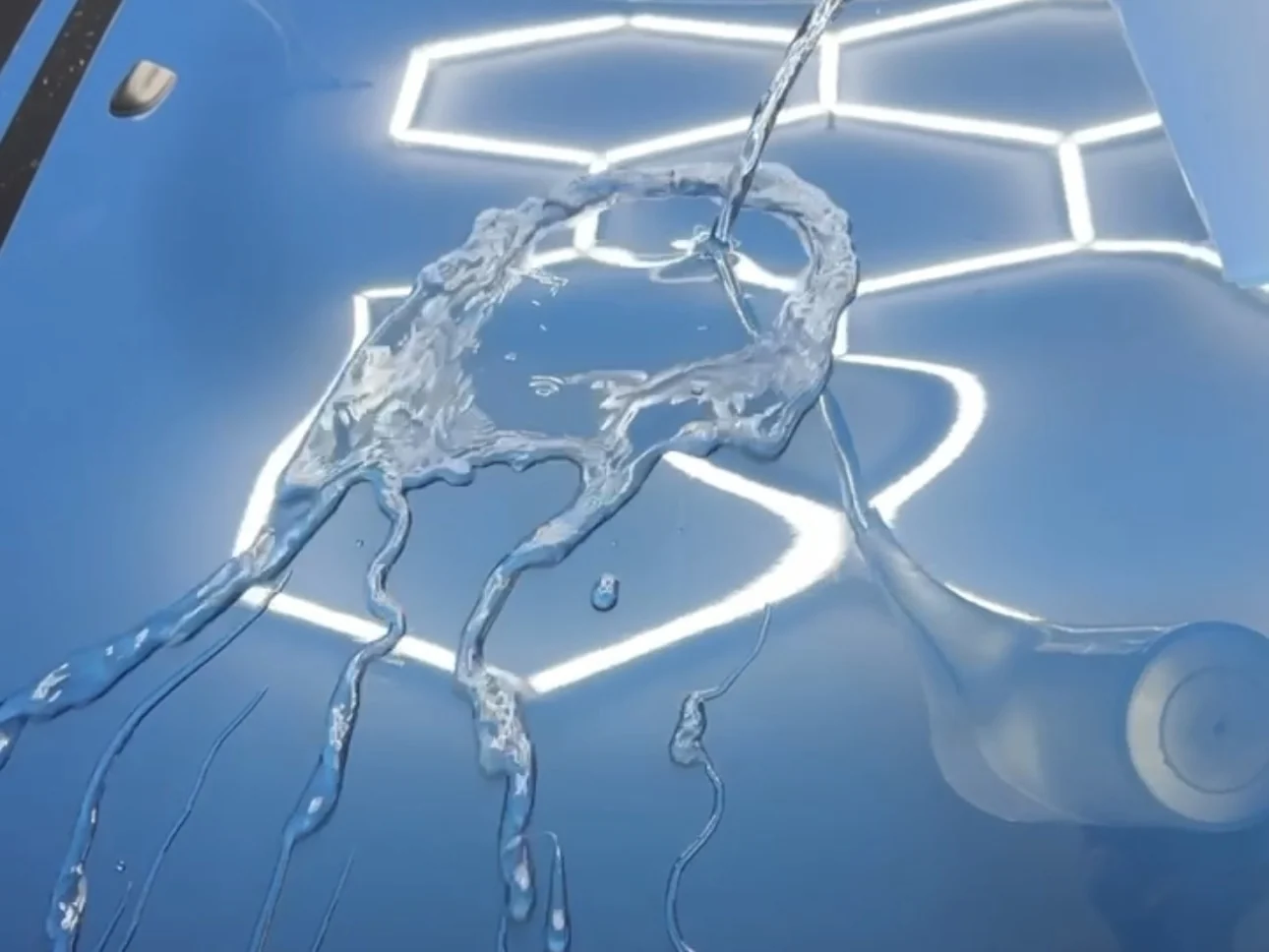
FIG. 04Round, tight water beads on a graphene coated bonnet.
4One chemistry for the whole car
Adam’s says its graphene coatings bond to practically any exterior surface: paint, wheels, plastic trim, chrome and glass. That’s why we use Adam’s graphene on glass, trim and wheel faces in our add-on package. Those surfaces wear faster than paint, so realistically they last about 2 years.
How it handles the weather
One customer brought in his 2012 Holden Calais for a graphene coating and a full detail inside and out. A week later he left us a Google review, under the name reppan67: “…high wind, showers, high heat and now storms and the car still looks great.” That’s what you want from a coating: it handles the weather and keeps the car easy to look after.
Where ceramic holds its own
Gtechniq Crystal Serum Light is known for strong swirl and chemical resistance, and it handles temperatures from -40°C to 250°C. On a garaged car, the EXO top layer wears much slower, and you get great protection for $200 less.
Why I recommend graphene for cars that live outside
When a customer asks me to decide, I first ask where the car is parked at home and at work.
✅ Outside most of the day: sun, rain, bird droppings, tree sap and dust hit the top layer of the coating every day. That's where graphene's longer protection and built-in water behaviour pay off.
✅ Under a roof most of the day: the top layer wears much slower, and ceramic gives great protection for less.
What about heat?
Graphene is famous as a heat conductor. In electronics research, a graphene-loaded coating lowered a heated aluminium plate’s surface temperature by 27.4°C compared with bare metal. Some car coating brands market this as better heat dissipation in the sun, so the surface doesn’t get as hot.
Sadly, there’s no independent testing of this on car paint yet, and Adam’s doesn’t claim it for its coating. So we share it as a potential benefit of the material, not a promise.
Myths I clear up with customers
"A ceramic coating prevents every scratch."
It doesn’t, and neither does graphene. A coating reduces the impact of light wash marks, but it’s not a shield. It’s designed to protect the paint from the elements and bring out the shine. It won’t stop a key scratch, a stone chip or a rough wash.
"9H or 10H means it's as hard as diamond."
Those numbers come from a pencil hardness test: the hardest pencil in the test didn’t leave a scratch. Diamond is a 10 on the Mohs scale, which is a completely different test for minerals. There’s no exact conversion, but one estimate puts 10H at only around 3 on the Mohs scale.
Pencil hardness test
Pencil leads of different hardness are pushed across a coated panel at a set angle and pressure, from the softest (B grades) up to the hardest (H grades). The hardest pencil that doesn't leave a scratch gives the rating. So 9H means a 9H pencil didn't scratch it in the lab.
Mohs scale
A completely different test, used for minerals. It runs from 1 (talc, the softest) to 10 (diamond, the hardest). Pencil lead itself is graphite, a very soft material. That's why a 9H or 10H coating is nowhere near diamond hardness, even though the numbers look similar.
So why put 9H or 10H on the bottle?
A big number sounds impressive, and most labels don’t say which test was used. As Detailed Image explains, when the scale isn’t stated, people may assume it’s Mohs, which would make the coating as hard as a diamond. That’s pretty misleading. Even one coating brand, FEYNLAB, calls pencil hardness an important, yet misleading, marketing tool. They also explain that a coating is usually less than 5 microns thick, so the test picks up the hardness of the paint underneath too, and a slick surface can make the pencil slide instead of scratch.
So when I talk about our coatings, I focus on what they actually do: protect the paint from the elements, make washing easier and bring out the shine.
"A dealership coating is the same thing."
Dealerships often use their own-brand product, with no public record of what’s in it or how it has been tested. People I know who’ve worked at dealerships tell me the application standards often don’t match good practice: little or no polishing, rushed work and a very thin layer. I had a client come in with a dealership coating sold as a 5-year coating. Six months later there was no water beading at all.
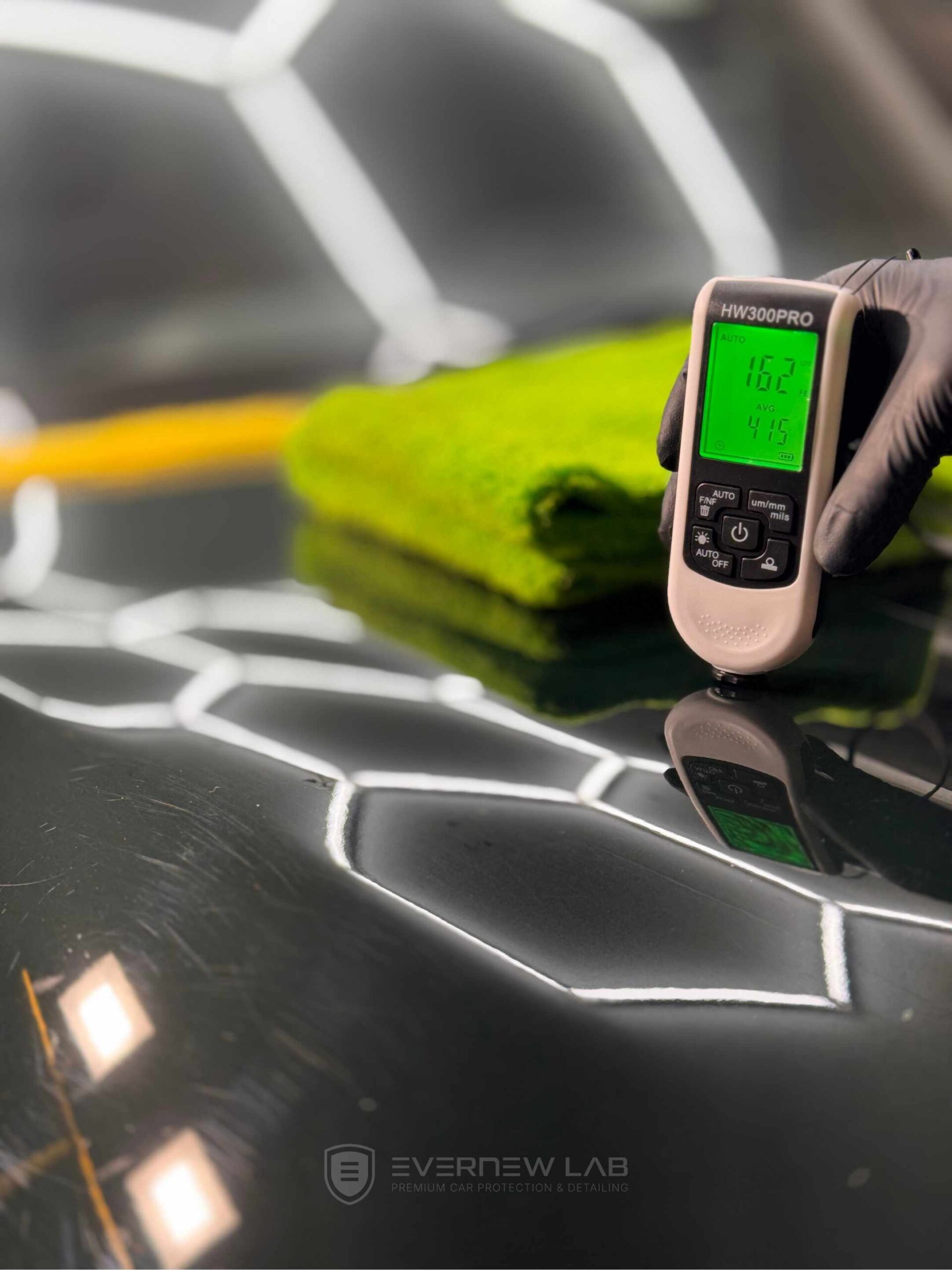
FIG. 05 Prep before machine polishing under the lab lights. Every coating we do starts with proper prep.
"You don't need to wash a coated car."
A coating makes washing easier, not unnecessary. Dirt, bird droppings and sap left on the paint slowly wear down the top layer. Wash regularly with a pH-neutral shampoo and avoid automatic car washes. Gtechniq itself notes that caustic wash chemicals shorten the lifespan of any coating. Once a year, a maintenance wash with us ($150, exterior) keeps your warranty valid and lets me check how the coating is going.
"A topper spray from the shop does the same job as a real coating."
Toppers and spray coatings refresh the top layer. You get more gloss and stronger beading for a while, which is why on the Adam’s forum, boosters like Ceramic Boost are recommended about once a month as maintenance. But a spray can’t replace the base coating that bonds to the paint and does the long-term protecting. And the wrong product can sit on top, clog the surface and make the beading worse. If you’re not sure, ask me before trying something new.
Is graphene worth the extra $200?
With us, graphene is $200 more than ceramic on every car size. Here’s how that looks per year of warranty for a sedan:
Warranty years aren’t a promise of exact life. Both need the yearly maintenance wash, and real life depends on how the car is stored and cared for. But if you keep your car for a long time, graphene works out cheaper per year.
My recommendation
Both are great products from brands with a strong reputation in the UK (Gtechniq) and the USA (Adam’s). But they’re not the same, and I don’t think you should pick at random.
✅ Choose graphene if your car is outside most of the day, or if you plan to keep it for 5 years or more. You get longer protection, water behaviour built into the coating, and a bit more shine. It's also what I'd pick for my own car.
✅ Choose ceramic if your car is garaged most of the time, or if you'll sell it in a few years. It's a smart choice and great value.
Whichever you choose, aftercare decides how long it lasts.
Bad maintenance or extreme conditions can shorten any coating’s life. That’s why we give you all the information and support you need after pickup, so you don’t have to worry about it.
FAQ
Is graphene coating better than ceramic coating?
In a few real ways, yes: longer claimed protection, water behaviour built into the coating and a bit more shine. Both are ceramic-based.
Is graphene coating just marketing?
No. It's a real chemistry: reduced graphene oxide grafted onto a ceramic coating. But some claims online are exaggerated, so check what the brand actually says.
Does graphene keep my paint cooler?
Graphene conducts heat very well, and some brands claim it helps. There's no independent testing on car paint yet, so we don't promise it.
How long does graphene coating last in Sydney?
Adam's claims 9+ years for the coating we use. Our warranty is 9 years with a yearly maintenance wash. Real life depends on storage and care.
Do I need to polish a brand new car before coating?
Yes. New cars arrive with light swirls and dealer wash marks, and the coating would seal them in.
Can I use ceramic sprays on a graphene coating?
Yes. Adam's says its graphene coatings still contain SiO2, so SiO2-based products work well for maintenance.
Questions and comments
Got a question about your car or something in this article? Leave it below and I’ll answer it here, so other readers can see it too. Comments are checked before they show up.
Not sure which one suits your car?
Tell me where your car is parked during the day and I’ll give you an honest recommendation and a quote. You can get a quote here, see both packages on our Ceramic Coating page, or book an inspection at our studio in Baulkham Hills. If your paint needs more work first, have a look at our paint correction options.
Protection done properly
Ceramic Coating
Gtechniq ceramic with a 5 year warranty or Adam’s graphene with 9 years. Every car gets a decon wash and machine polish first.
Paint Correction
Machine polishing to remove swirls, light scratches and oxidation. We tell you upfront what is realistically fixable.
Car Detailing
Interior steam clean and sanitise, or a full interior and exterior detail. Good for family cars too.
2 comments
This information has been incredibly useful for understanding the differences between each product; I also appreciate the detailed explanations, which are clear and easy to grasp. Thanks to articles like this, I can learn more about how automotive detailing works and just how important this service is.
Hi Manu, thanks a lot for reading it and taking the time to leave a comment, really appreciate it.
That was the idea with this article. A lot of people hear “ceramic” and “graphene” and think one is magic and the other one is old, but both are great protection. The right one really depends on your car and how long you plan to keep it.
I like to explain the science behind it simply, because once you understand how a coating bonds to the paint and cures, it’s much easier to look after your car and make the right choice.
If you ever have a question about your own car, just leave it here and I’ll answer it.
Gracias,
Alex